Chess Quotes for Strategy, Life, and Inspiration
Chess quotes compress an entire game into a few memorable words. They capture calculation, courage, patience, creativity, pressure, and the emotional swing from a brilliant tactic to a painful blunder.
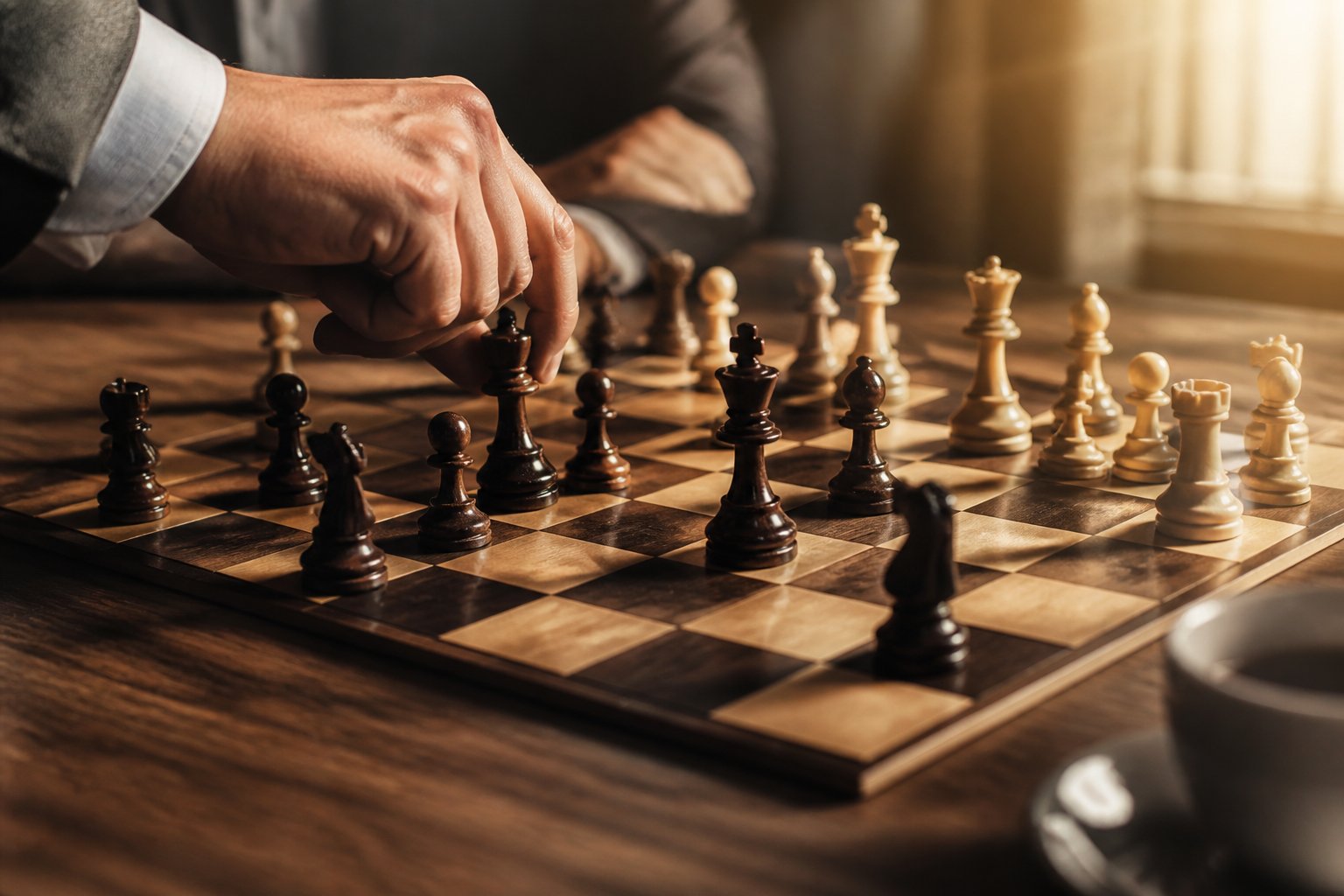
The best chess quotes give us a practical idea to carry from the board into daily decisions: think ahead, accept mistakes, and keep searching for the strongest move. Grandmasters, writers, philosophers, and champions have all used chess to explain strategy, discipline, risk, and human character.
1) “Chess Is The Struggle Against Error.” — Johannes Zukertort
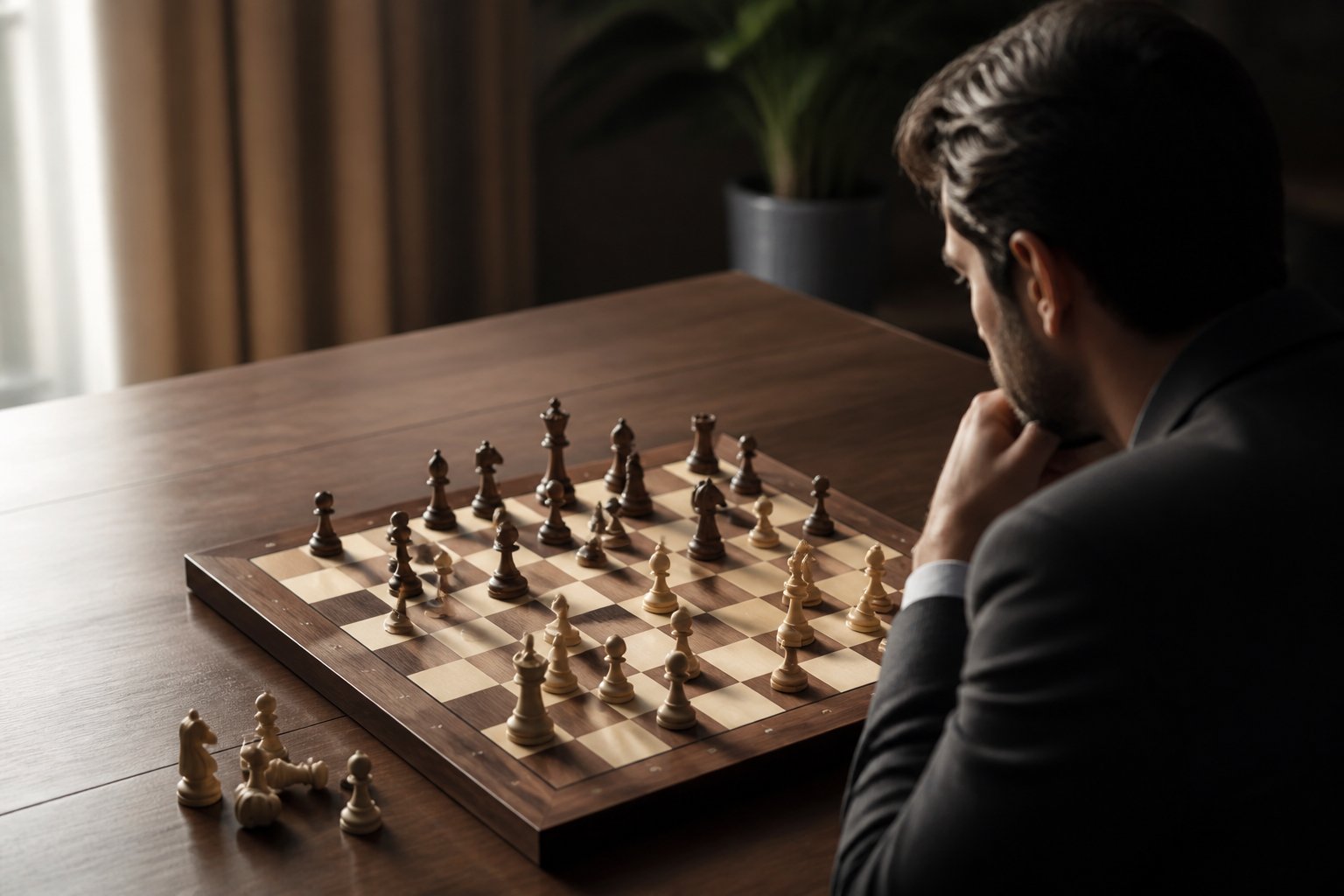
Johannes Zukertort’s quote presents chess as a continuous effort to reduce mistakes. Every position asks us to notice threats, test assumptions, and calculate consequences before committing to a move.
That idea becomes especially clear during practical games. A strong opening can disappear after one careless pawn push, while a difficult position can recover through patient defense. Reviewing our blunders after a game reveals where attention failed: an overlooked check, a loose piece, or an evaluation based on hope instead of calculation.
The quote also suits life because progress rarely comes from flawless performance. We improve by identifying errors, correcting patterns, and returning to the next decision with sharper awareness.
2) “Every Chess Master Was Once A Beginner.” — Irving Chernev
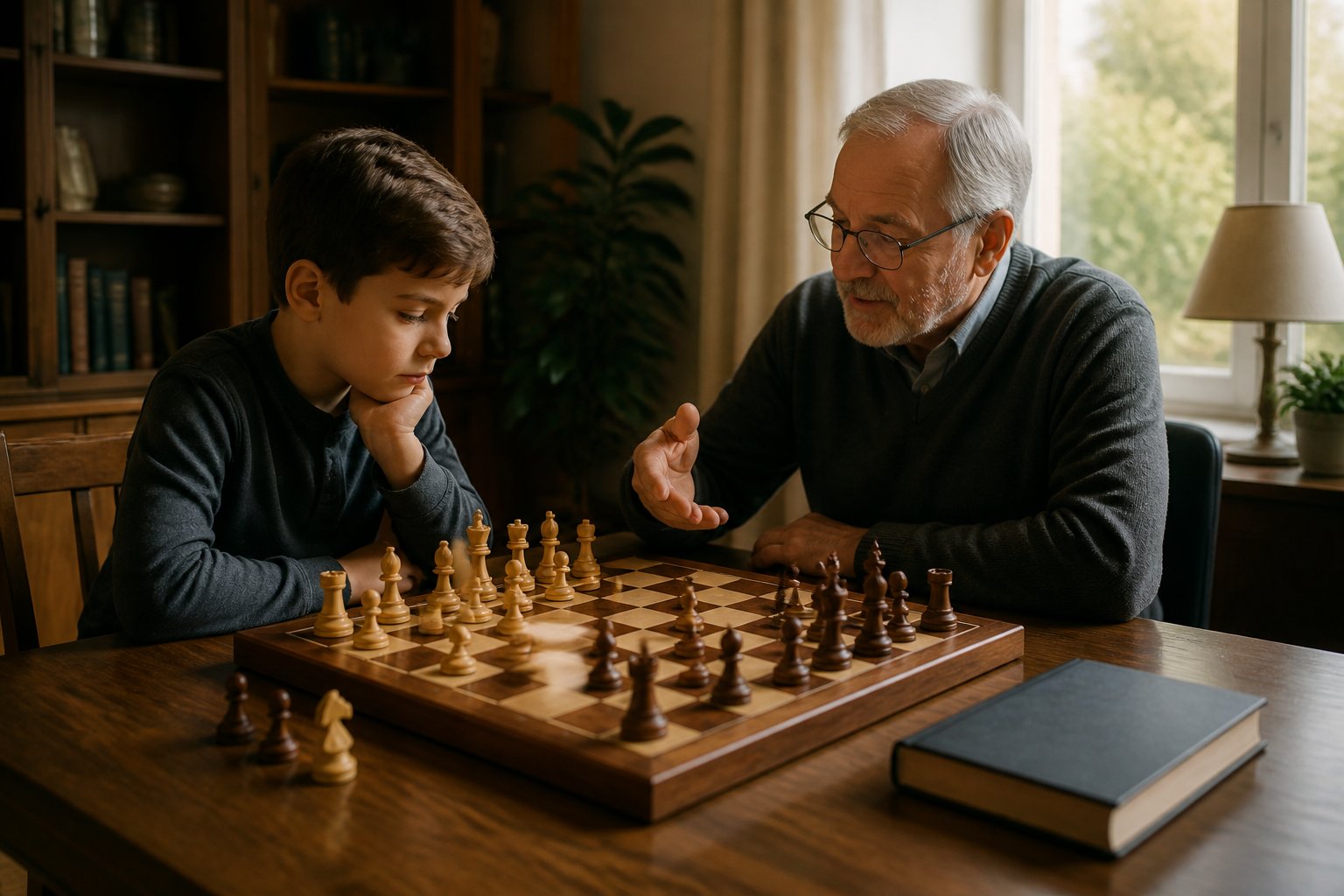
Irving Chernev reminds us that mastery begins with curiosity and repetition. A grandmaster once learned how the knight moves, blundered queens, and struggled to recognize basic tactical patterns.
Beginners make faster progress when they study simple positions deeply. Learning checkmate patterns, opening principles, tactical motifs, and basic endgames creates a reliable foundation for more advanced calculation. Playing stronger opponents also exposes weaknesses that casual victories leave hidden.
We find this quote especially useful before a first tournament. Rating, nerves, and unfamiliar notation lose some power when we remember that every expert started with a blank score sheet and a first move.
3) “When You See A Good Move, Look For A Better One.” — Emanuel Lasker
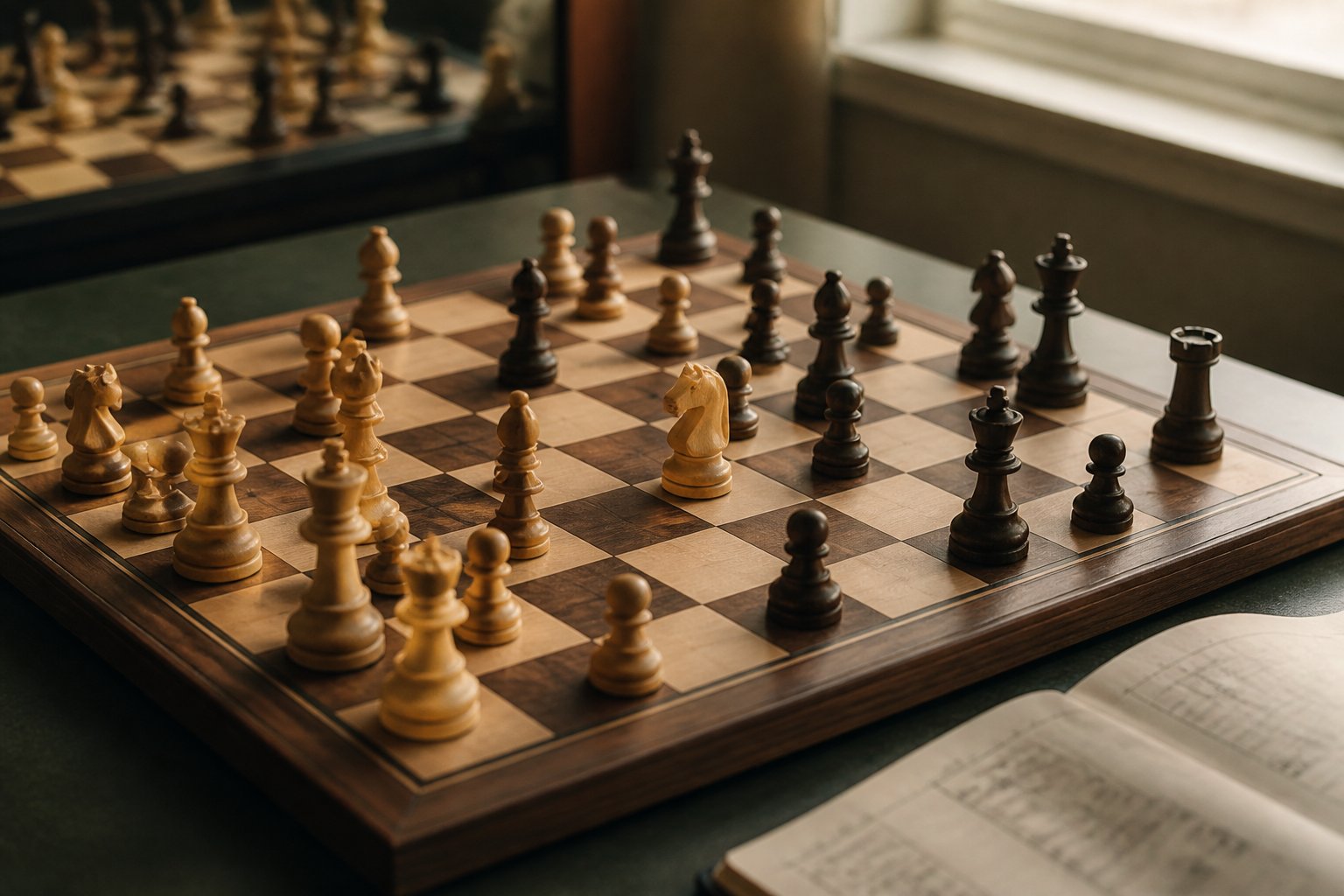
Emanuel Lasker’s advice teaches practical discipline: pause after finding a promising move and search for stronger candidates. The first attractive idea may work, yet a forcing check, capture, or tactical threat could produce a decisive advantage.
At the board, we use a short verification routine. We examine checks, captures, threats, the opponent’s strongest reply, and the consequences of moving a defended piece. This process protects us from emotional attachment to the first move that looks elegant.
The principle applies beyond chess. A workable plan deserves a second examination when the cost of acting is high and better information is available.
4) “Chess Is Not For Timid Souls.” — Wilhelm Steinitz
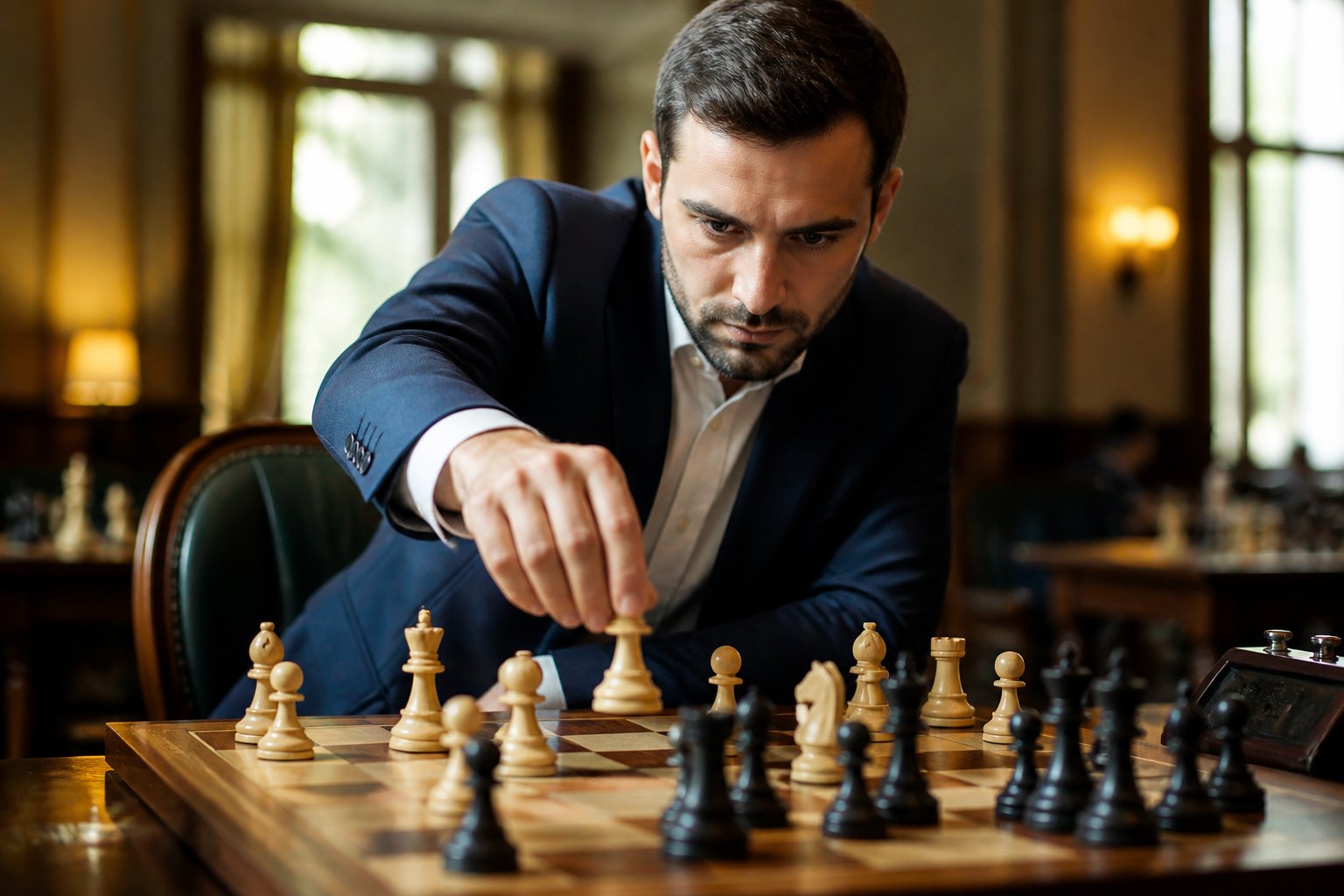
Wilhelm Steinitz connects strong chess with courage. Competitive play demands initiative, accurate risk assessment, and the willingness to enter sharp positions when passive moves surrender control.
Courage does not mean attacking without preparation. A sound sacrifice rests on concrete calculation, development, king safety, or a lasting positional gain. The bold player still checks whether the opponent has a defensive resource.
This quote inspires us during moments when a quiet move feels safe but leaves our position cramped. Sometimes the correct decision is to open the center, challenge an active piece, or accept a complicated line that rewards precise play.
5) “The Winner Is The One Who Makes The Next-To-Last Mistake.” — Savielly Tartakower
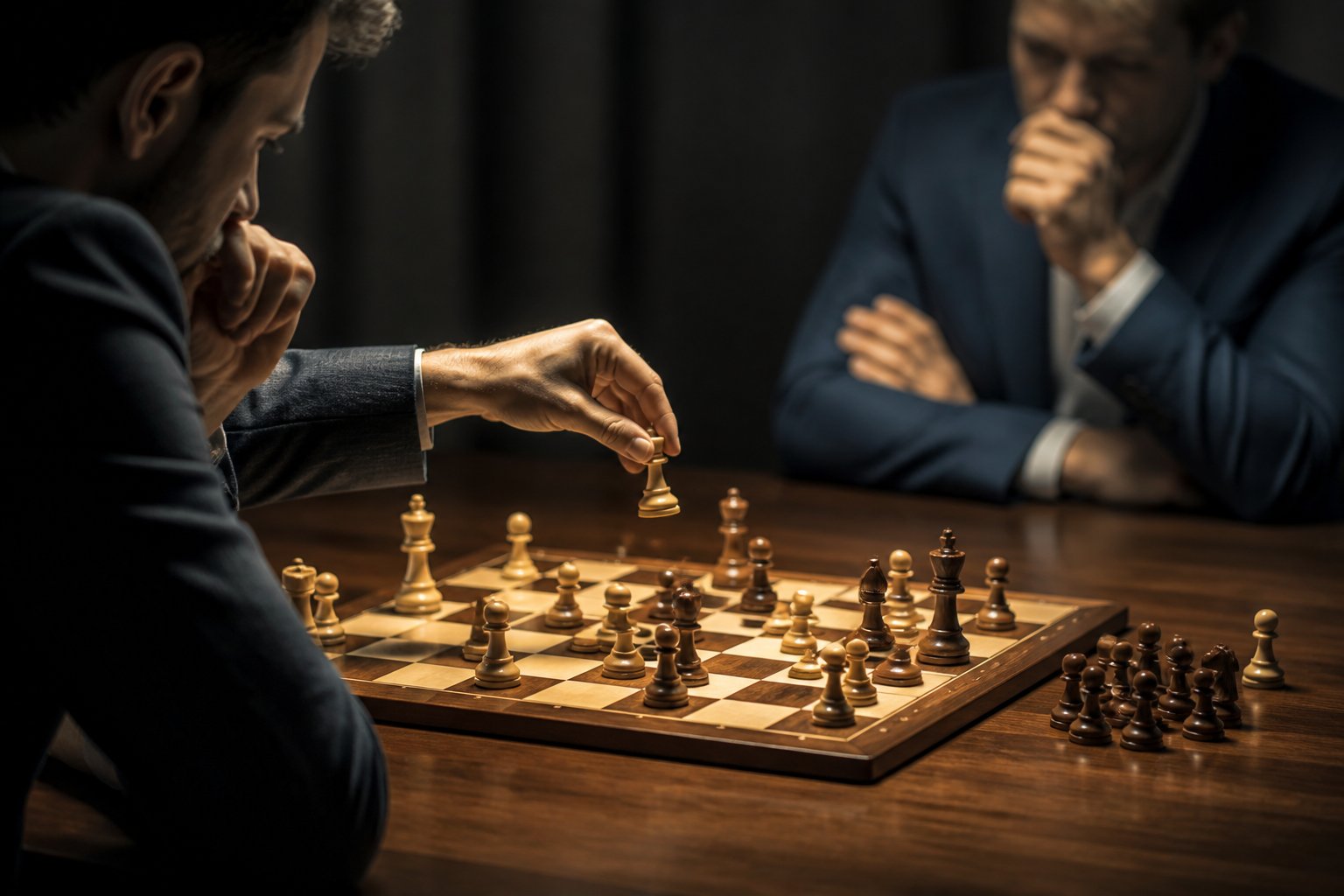
Savielly Tartakower captures the imperfect reality of human chess. Many games contain errors from both sides, and victory often goes to the player who keeps the position playable after a mistake.
The quote encourages resilience after a blunder. We should identify the new demands of the position, create complications when appropriate, and make the opponent solve fresh problems. Resigning emotionally after losing material throws away practical chances.
It also explains why post-game analysis deserves honesty. The decisive error may have occurred several moves before the obvious blunder, when an inaccurate plan created the conditions for collapse.
6) “In Life, As In Chess, Forethought Wins.” — Charles Buxton
Charles Buxton links chess with advance planning. Before we move, we must consider the position that move creates, the opponent’s reply, and the endgame that may follow.
Forethought includes more than calculating long variations. It means developing pieces efficiently, protecting the king, managing time, and recognizing whether an exchange helps our plan. A simple question such as “What changes after this move?” catches many avoidable errors.
The same habit improves practical decisions outside competition. Preparing alternatives, checking consequences, and leaving room for changing conditions gives us more control when events become complicated.
7) “Avoid The Crowd. Do Your Own Thinking Independently. Be The Chess Player, Not The Chess Piece.” — Ralph Charell
Independent thinking is a central chess skill because fashionable moves still fail in the wrong position. We must evaluate the board in front of us, even when an opening line, engine suggestion, or confident opponent points elsewhere.
This quote encourages personal responsibility. Before accepting advice, we can ask whether the move fits our king safety, pawn structure, development, and tactical opportunities. Memorized theory helps until the position leaves familiar territory.
The life lesson reaches beyond competition. Independent judgment protects us from copying a group’s assumptions when evidence on the board points in another direction.
8) “Chess Is The Gymnasium Of The Mind.” — Blaise Pascal
Chess trains mental habits through a structured contest. Calculation develops visualization, positional analysis demands patience, and time pressure tests decision-making under stress.
A useful training session balances tactics with slower work. We solve positions without moving the pieces, explain candidate moves aloud, and compare our final analysis with a trusted reference or engine. That routine builds practical strength more effectively than collecting opening variations alone.
Pascal’s metaphor remains powerful because chess exercises several forms of thought at once. We must remember patterns, imagine change, control emotion, and revise plans after every reply.
9) “The Most Powerful Weapon In Chess Is To Have The Next Move.” — David Bronstein
Initiative gives us the power to ask questions that the opponent must answer. A forcing check, threat, or pawn break can make our plan easier because the other side spends time responding.
Bronstein’s quote highlights tempo and activity. A materially equal position may favor the player whose pieces coordinate around an immediate threat. We look for moves that improve a piece while creating a problem, such as a rook move that attacks a weak pawn.
The idea also clarifies why passive defense feels uncomfortable. When every move responds to pressure, our choices shrink and calculation becomes more difficult.
10) “Play The Opening Like A Book, The Middlegame Like A Magician, And The Endgame Like A Machine.” — Rudolf Spielmann
Rudolf Spielmann assigns each phase of chess a distinct skill. Opening play benefits from sound principles and established patterns, the middlegame rewards imagination, and the endgame demands technical precision.
We apply the quote by changing our questions as the position evolves. Early on, we prioritize development and king safety. In the middlegame, we search for tactical resources and long-term plans. In the endgame, we calculate pawn races, opposition, zugzwang, and king activity with care.
The line also makes training easier to organize. Opening study, tactical puzzles, and fundamental endgame positions develop different parts of practical strength.
11) “Chess, Like Love, Like Music, Has The Power To Make Men Happy.” — Siegbert Tarrasch
Siegbert Tarrasch emphasizes chess as a source of pleasure, not merely a test of rating. A beautiful combination, a clever defensive resource, or a well-played endgame can create satisfaction even when the result is disappointing.
Players experience that joy through different routes. Some enjoy strategic planning, others prefer tactical attacks, and many appreciate the quiet elegance of improving a piece without forcing immediate action.
This quote gives competitive chess a healthier emotional frame. We can pursue improvement seriously while preserving the curiosity that made the game compelling in the first place.
12) “Daring Ideas Are Like Chessmen Moved Forward. They May Be Beaten, But They May Start A Winning Game.” — Johann Wolfgang von Goethe
Goethe compares bold ideas with advanced chess pieces. A forward move creates risk, yet it also changes the structure and opens possibilities that cautious play never reaches.
In chess, a daring pawn break or exchange sacrifice needs a concrete purpose. It may gain space, expose a king, destroy a defender, or create a passed pawn. Without a follow-up, bravery becomes self-inflicted weakness.
We use this quote as encouragement to test ambitious plans while accepting that strong ideas still require revision. A failed experiment can reveal a strategic principle that cautious success would never teach.
13) “Only The Player With The Initiative Has The Right To Attack.” — Wilhelm Steinitz
Wilhelm Steinitz places initiative at the center of a successful attack. An attack works when our pieces act with tempo, targets are available, and the opponent lacks time to reorganize.
Before sacrificing material, we check whether our pieces participate. A queen and one knight near the enemy king rarely compensate for undeveloped rooks or a trapped bishop. Improving the worst-placed piece often creates the initiative an attack needs.
The quote also warns against attacking from frustration. When the opponent controls the pace, a patient regrouping move may be stronger than an immediate advance.
14) “To Play For A Draw, At Any Rate With White, Is To Some Degree A Crime Against Chess.” — Mikhail Tal
Mikhail Tal’s provocative statement celebrates ambition, especially for the player expected to press with the first move. White’s initiative creates practical chances, and Tal believed those chances deserved energetic treatment.
The quote does not erase the value of defensive technique or a well-earned draw. Tournament standings, match situations, and position-specific risks all influence a sound decision. Tal’s point concerns the mindset of surrendering ambition before the game begins.
We read it as a challenge to seek active plans. Even when the position is equal, improving piece placement and creating small problems keeps the game alive.
15) “Whoever Sees No Other Aim In The Game Than That Of Giving Checkmate To One’s Opponent Will Never Become A Good Chess Player.” — Max Euwe
Max Euwe explains that checkmate is the final result, while the route to it requires broader aims. Space, development, pawn structure, weak squares, exchanges, and endgame advantages shape the position long before a mating attack appears.
A player who hunts for checks every turn misses quieter opportunities. Winning a pawn, eliminating a key defender, or occupying an open file may create the conditions for victory more reliably than forcing a premature attack.
This quote helps beginners expand their evaluation. We ask what the position demands now, whether that means king safety, simplification, prophylaxis, or tactical calculation.
16) “The Human Element, The Human Flaw, And The Human Nobility—Those Are The Reasons That Chess Matches Are Won Or Lost.” — Viktor Korchnoi
Viktor Korchnoi points toward the psychological side of chess. Calculation matters, yet concentration, confidence, time management, and emotional control influence the moves that reach the board.
Human flaws appear as impatience, fear of complications, overconfidence after a good sequence, or reluctance to admit that a plan has failed. Human nobility appears in resilience, honest analysis, and respect for a difficult opponent.
We see this most clearly in long matches. Two players may know the same opening, while the contest turns on who handles fatigue and uncertainty more effectively.
17) “Chess Is A War Over The Board. The Object Is To Crush The Opponent’s Mind.” — Bobby Fischer
Bobby Fischer describes chess as a psychological battle in which pressure accumulates move by move. The strongest position often forces the opponent to solve difficult problems with limited time and imperfect information.
The language is dramatic, yet the practical lesson is precise: create threats that demand accurate responses. A cramped position, an exposed king, or a difficult endgame can drain confidence even without an immediate tactical win.
We still need sportsmanship at the board. Applying pressure means playing accurately and energetically, not behaving disrespectfully toward the person across from us.
18) “That’s What Chess Is All About. One Day You Give Your Opponent A Lesson, The Next Day He Gives You One.” — Bobby Fischer
Fischer’s observation captures the changing balance between opponents. A player who dominates one game may discover a new weakness in the next, especially when both sides review their previous encounter.
Losses become valuable when we analyze the critical moment without excuses. We can record the move where the evaluation changed, identify the missed resource, and build a training position from it.
The quote also encourages humility after a convincing win. Every result supplies information, and a prepared opponent will return with adjustments.
19) “I Have Come To The Personal Conclusion That While All Artists Are Not Chess Players, All Chess Players Are Artists.” — Marcel Duchamp
Marcel Duchamp sees artistry in the decisions chess players create on a limited board. A combination can possess rhythm, surprise, economy, and visual elegance even when its purpose is completely practical.
Creative chess begins with accurate observation. We notice unusual piece relationships, unconventional sacrifices, and positional resources that standard patterns overlook. Calculation then determines whether the idea survives contact with defense.
The quote gives language to a familiar experience: some moves feel beautiful because the concept behind them is clear, unexpected, and deeply connected to the position.
20) “Even A Poor Plan Is Better Than No Plan At All.” — Mikhail Chigorin
Mikhail Chigorin values direction because aimless moves gradually damage coordination. A plan gives our pieces shared work, even when the plan needs correction after the opponent responds.
A useful plan can be modest: double rooks on an open file, attack a backward pawn, improve a knight, or prepare a central break. We then verify whether the opponent’s threats require immediate attention.
The quote does not excuse stubbornness. A plan serves calculation, and strong players replace it when the pawn structure or tactical situation changes.
21) “We Cannot Resist The Fascination Of Sacrifice, Since A Passion For Sacrifices Is Part Of A Chess Player’s Nature.” — Rudolf Spielmann
Rudolf Spielmann recognizes the emotional appeal of giving up material for activity. Sacrifices create drama because they transform a familiar material count into a contest of initiative and calculation.
The best sacrifices have identifiable compensation. We look for forced checks, exposed kings, development gains, weakened squares, or a pawn that cannot be stopped. A speculative sacrifice can still be instructive, yet it should be labeled as a risk.
This quote resonates during tactical training because sacrifice puzzles teach us to value time, coordination, and king safety alongside material.
22) “The Pin Is Mightier Than The Sword.” — Fred Reinfeld
Fred Reinfeld turns a chess tactic into a memorable pun. A pin restricts a piece because moving it would expose a more valuable target, often the king or queen.
Pins become powerful when we increase the pressure behind them. Adding a rook to a file, attacking the pinned piece again, or creating a discovered threat can convert restriction into material gain. We still check whether the pinned piece has a legal tactical escape.
The phrase works well for beginners because it makes an abstract tactical motif easy to recall during a game.
23) “Half The Variations Calculated In A Tournament Game Turn Out To Be Completely Superfluous. Unfortunately, No One Knows In Advance Which Half.” — Jan Timman
Jan Timman captures the uncertainty of calculation. We can spend precious clock time analyzing branches that never arise while missing a simple defensive resource in the main line.
Efficient calculation starts with forcing moves. Checks, captures, and direct threats narrow the tree, while positional candidates receive comparison after immediate tactics are addressed. Writing down every imagined variation rarely improves accuracy.
The quote also offers comfort during time trouble. Perfect calculation is impossible in a practical game, so we need a process that identifies the most consequential lines first.
24) “Chess Is Rarely A Game Of Ideal Moves. Almost Always, A Player Faces A Series Of Difficult Consequences Whichever Move He Makes.” — David Shenk
David Shenk describes the decision pressure built into real positions. We frequently choose between imperfect options, such as accepting an isolated pawn, entering a sharp attack, or allowing a slightly worse endgame.
Strong play begins with comparing consequences. We assess king safety, material, activity, pawn structure, and the opponent’s resources, then select the line that offers the clearest practical chances.
This quote helps us move beyond the search for a magical move. Many positions reward the player who manages disadvantages accurately and creates the fewest new problems.
25) “The King Is A Fighting Piece. Use It!” — Wilhelm Steinitz
Wilhelm Steinitz highlights the king’s transformation during the endgame. Once queens leave the board and mating threats fade, the king becomes an active piece that can attack pawns and support promotion.
We bring the king toward the center when the position is safe. Opposition, key squares, triangulation, and pawn races then determine whether that activity produces a win or only a draw.
The advice also corrects a common beginner habit: treating the king as permanently fragile. In a simplified position, leaving it passive can surrender the decisive tempo.
26) “A Bad Plan Is Better Than None At All.” — Frank Marshall
Frank Marshall’s quote emphasizes purposeful play. Even an inaccurate plan gives us a framework for evaluating moves and noticing when the opponent has changed the position.
The best repair is specific. If an attack stalls, we may improve a defender, open a file, exchange a blocker, or switch to a favorable endgame. A vague desire to “do something” produces random moves that create new weaknesses.
We find this advice useful in quiet middlegames, where the absence of an immediate tactic makes disciplined planning essential.
27) “The Only Thing Chess Players Have In Common Is Chess.” — Lodewijk Prins
Lodewijk Prins points to the diversity of the chess community. Players differ in age, profession, personality, culture, and playing style, yet the board provides a shared language.
That common ground appears at clubs, scholastic events, online arenas, and international tournaments. A notation sheet, a familiar opening, or a post-game analysis can begin a conversation across generations.
The quote also reminds us that chess identity is broad. Tactical attackers, endgame specialists, casual players, coaches, and problem composers all contribute to the culture of the game.
28) “Chess Holds Its Master In Its Own Bonds, Shackling The Mind And Brain So That The Inner Freedom Of The Very Strongest Must Suffer.” — Albert Einstein
Albert Einstein describes chess as an absorbing discipline capable of capturing intense concentration. Deep calculation narrows attention until the board occupies nearly every mental resource.
That absorption explains both chess’s appeal and its demands. Long sessions require breaks, hydration, posture awareness, and enough recovery for analysis to remain accurate. A tired mind sees fewer defensive resources.
We appreciate the quote as a portrait of immersion. Chess rewards focus, while reminding us that mental effort has a real cost.
29) “The Chessboard Is The World, The Pieces Are The Phenomena Of The Universe, The Rules Of The Game Are What We Call The Laws Of Nature.” — Thomas Huxley
Thomas Huxley uses chess as a model for a system governed by rules and relationships. Each piece has distinct powers, and every position emerges from the interaction of those constraints.
The metaphor helps explain why chess feels both free and structured. We choose our moves, yet legal movement, geometry, material, and time impose boundaries. Creativity grows inside those boundaries.
For students, the quote encourages a systems view. A single pawn move changes diagonals, escape squares, open files, and future endgames across the entire board.
30) “Chess Is Life In Miniature. Chess Is Struggle, Chess Is Battles.” — Garry Kasparov
Garry Kasparov presents chess as a concentrated model of conflict and decision-making. A game contains preparation, uncertainty, momentum, setbacks, and recovery within a limited space and time.
The comparison becomes useful when we examine choices instead of results alone. A strong move can create future options, while a careless decision can restrict them several turns later. The board makes those consequences visible.
Kasparov’s words suit players who experience chess as a serious contest. Every move carries strategic meaning, from an opening development choice to a king move in a pawn ending.
31) “The Pawns Are The Soul Of Chess.” — François-André Danican Philidor
Philidor gave pawns a central role in chess strategy. Their structure determines open files, weak squares, passed pawns, space, and the character of the endgame.
Pawns also carry irreversible consequences. A single advance can gain territory while creating a hole, restrict an enemy bishop, or weaken our king. We examine pawn breaks carefully because they often define the plan for many moves.
The quote encourages us to value small units. Pawns may move slowly, yet they shape the battlefield on which every major piece operates.
32) “The Best Way To Improve Your Chess Is To Play Better Players.” — José Raúl Capablanca
José Raúl Capablanca recommends challenging opponents who expose our weaknesses. Stronger players punish loose pieces, demonstrate efficient plans, and make us calculate with greater care.
To gain the most from those games, we record our thoughts before checking an engine. We then compare our candidate moves with the opponent’s choices and identify the first point where our evaluation diverged.
A stronger opponent may produce difficult losses, yet each game supplies a concentrated lesson in preparation, time management, and practical defense.
33) “A Chess Game Is A Dialogue, A Conversation Between Two Minds.” — Mikhail Botvinnik
Mikhail Botvinnik describes chess as communication through moves. Each move states an intention, asks a question, or challenges an assumption made by the opponent.
We can read the position as a conversation by asking what the last move changed. Did it attack a piece, abandon a square, threaten a pawn break, or reveal a weakness? The answer directs our candidate-move search.
This perspective makes analysis more active. We respond to meaning and consequences, not merely to the visual arrangement of pieces.
34) “Chess Is Above All A Fight.” — Emanuel Lasker
Emanuel Lasker places competitive struggle at the heart of chess. Technical knowledge helps, yet practical play also demands endurance, resourcefulness, and the will to keep asking difficult questions.
A fight can occur in any type of position. We may battle for an open file, a critical square, a tempo in a pawn ending, or the right to simplify. Material advantage does not remove the need for precision.
The quote is especially useful after an unexpected setback. A lost pawn changes the task, while active counterplay can still make the opponent work.
35) “You May Learn Much More From A Game You Lose Than From A Game You Win.” — José Raúl Capablanca
Capablanca’s advice makes losing games valuable training material. Victory can conceal inaccurate decisions because the opponent failed to exploit them, while defeat exposes the cost.
Our most productive review identifies three moments: the first strategic misunderstanding, the critical tactical error, and the practical decision that made recovery harder. We then replay those positions without the original time pressure.
A loss becomes useful when it produces a specific adjustment, such as checking forcing replies, improving endgame technique, or refusing a familiar but unsuitable plan.
36) “The Most Important Feature Of The Chess Player’s Mind Is The Ability To Think Creatively.” — Mikhail Tal
Mikhail Tal celebrates creative thought as a practical chess weapon. Creative players notice tactical resources, unusual defensive ideas, and positional transformations that routine calculation misses.
Creativity grows through exposure to varied positions. We study brilliant games, solve exercises without hints, and ask what alternative plans the position permits. Accuracy must test each idea before confidence accepts it.
This quote also supports experimentation during analysis. A strange candidate move deserves examination when it changes the opponent’s choices or creates a new tactical relationship.
37) “Tactics Flow From A Superior Position.” — Bobby Fischer
Bobby Fischer links tactical success with positional preparation. Active pieces, better space, safer king placement, and favorable pawn structure create the conditions in which combinations become available.
When a position improves, we scan for tactical consequences. A pinned defender, overloaded piece, weak back rank, or loose pawn may turn a quiet advantage into a concrete win.
The quote guides our training priorities. Tactical puzzles matter, while strategic play determines whether the board contains the targets those tactics require.
38) “It Is Not Enough To Be A Good Player; You Must Also Play Well.” — Siegbert Tarrasch
Siegbert Tarrasch separates general ability from performance in a particular game. A knowledgeable player still needs accurate time management, attention, calculation, and emotional control at the board.
Playing well means adapting to the position in front of us. A favorite opening plan may fail against a changed pawn structure, and a winning position may require patience instead of brilliance.
The distinction is valuable for tournament preparation. We review practical habits, including clock checks, blunder prevention, and endgame conversion, alongside opening knowledge.
39) “The Beauty Of A Move Lies Not In Its Appearance But In The Thought Behind It.” — Aron Nimzowitsch
Aron Nimzowitsch defines chess beauty through purpose. A quiet rook lift or prophylactic pawn move may look ordinary while solving several positional problems at once.
We appreciate such moves by asking what they accomplish. Does the move restrict a break, improve a piece, create a threat, or prepare a structural change? The answer reveals the idea hidden beneath the notation.
This quote also improves annotation. Instead of labeling a move “beautiful” without explanation, we describe the relationship that makes it effective.
40) “The Hardest Game To Win Is A Won Game.” — Emanuel Lasker
Emanuel Lasker identifies the special pressure of converting an advantage. Once we expect victory, attention can loosen and calculation can become careless.
Conversion requires a fresh evaluation. We check whether simplification is safe, whether the opponent has counterplay, and whether a technical endgame is easier than continued complications. A winning position still contains threats.
This quote belongs beside every endgame study. Converting extra material, a passed pawn, or a superior king often demands more precision than gaining the advantage required.
41) “A Knight On The Rim Is Dim.” — Siegbert Tarrasch
Tarrasch’s rhyme warns that edge squares reduce a knight’s influence. A knight on the rim controls fewer central squares and may need several moves to return to useful play.
The principle has exceptions. A rim knight can defend a key pawn, attack a trapped piece, or occupy a strong outpost near the corner. We evaluate its concrete role before applying the rule mechanically.
For practical games, the quote prompts a quick piece-quality check: where can the knight reach, what does it attack, and how many tempi will improvement require?
42) “The Passed Pawn Is A Criminal, Who Should Be Kept Under Lock And Key.” — Aron Nimzowitsch
Nimzowitsch gives the passed pawn a memorable identity because it threatens promotion without an opposing pawn to block it. Its strength grows as it advances and receives support.
The best defense often uses blockade. A piece occupies the square in front of the pawn, while other pieces attack its supporters or create counterplay elsewhere. Rushing to capture it may release a tactical resource.
We use this quote when teaching pawn endings and rook endgames, where one advanced passer can decide the result despite material balance.
43) “Even The Laziest King Flees Wildly In The Face Of A Double Check!” — Aron Nimzowitsch
Nimzowitsch highlights the extraordinary force of double check. Because both checking pieces attack the king, capturing one attacker or blocking a line does not solve the entire threat.
The legal responses become highly limited: the king must move, unless a move captures the checking piece while resolving both attacks. Recognizing the motif quickly prevents wasted calculation.
The quote adds humor to a serious tactical lesson. A king that ignores ordinary threats may still have no choice when two lines open simultaneously.
44) “The King, Like The Sun, Cannot Be Looked At Directly.” — Vladimir Nabokov
Vladimir Nabokov gives the king an almost mythic presence. Its safety governs the opening, while its activity becomes decisive after the queens leave.
We study king exposure by examining open files, weakened diagonals, escape squares, and the number of attacking pieces. A direct attack requires more than a queen near the enemy monarch.
The poetic wording helps beginners remember a practical rule: keep track of the king’s location and safety before evaluating material gains.
45) “Chess Is A Beautiful Mistress.” — Siegbert Tarrasch
Tarrasch portrays chess as demanding, captivating, and capable of claiming sustained attention. Players return because the game offers endless positions and fresh problems.
Its beauty appears in different forms: a precise combination, a harmonious position, a difficult save, or a king-and-pawn ending played perfectly. No single style owns the aesthetic side of chess.
We enjoy this quote when chess study feels demanding. The work remains connected to a game rich enough to reward a lifetime of curiosity.
46) “Chess Is A Game Of Mistakes.” — Richard Réti
Richard Réti recognizes that human chess develops through errors. Players miscalculate, misjudge plans, overlook resources, and then adapt to the consequences.
This idea changes how we review games. Instead of searching only for spectacular blunders, we examine small inaccuracies that weakened a position: a misplaced piece, an unnecessary pawn move, or a missed simplification.
Improvement follows when each mistake receives a category and a corrective exercise. Tactical oversights, opening memory gaps, and endgame technique require different remedies.
47) “The King Is Dead, Long Live The King.” — Traditional Chess Saying
This traditional saying captures the transition after a king is checkmated and the game ends. It also echoes the recurring cycle of chess, where one finished contest gives way to another.
The king’s importance remains central throughout the game. Checkmate ends the current position, while the next game restores the opening struggle with both monarchs safe and active plans waiting.
We hear a wider message in the phrase: outcomes pass, and the board always offers a new starting position.
48) “In Chess, Knowledge Is A Very Transient Thing. It Changes So Fast That Even A Single Mouse Slip Sometimes Changes The Evaluation.” — Viswanathan Anand
Viswanathan Anand points to the speed at which chess knowledge evolves. Opening theory shifts, engines discover resources, and one inaccurate click or move can transform an evaluation.
That volatility makes flexible thinking essential. Memorized lines provide a starting point, while calculation determines whether the current position still matches known analysis. Online players also need move confirmation habits and careful mouse control.
The quote applies to over-the-board chess as well. A position’s evaluation remains tied to concrete choices, not to reputation or a remembered general rule.
49) “Critical Thinking Is The Most Important Factor With Chess. As It Is In Life, You Need To Think Before You Make Decisions.” — Hikaru Nakamura
Hikaru Nakamura connects chess with deliberate decision-making. Critical thinking means defining the position, generating candidates, testing the opponent’s strongest reply, and choosing a move for clear reasons.
A practical checklist reduces impulsive errors. We ask what changed, what is threatened, which pieces are loose, and whether our intended move allows a forcing response. The routine takes seconds once practiced.
The life connection feels direct because chess makes decision quality visible. A choice produces a new position, and the next decision must respond to those consequences.
50) “Losing Games Is A Good Thing Because You Learn More From When You Lose Than When You Win.” — Hikaru Nakamura
Nakamura frames losses as concentrated feedback. A defeat exposes a gap in calculation, opening preparation, practical defense, or emotional control.
We preserve that feedback by analyzing before looking at engine lines. First, we reconstruct our thoughts and identify the move that seemed safe or promising. Then we compare alternatives and create a short training plan from the lesson.
A loss should produce an action item. That might mean solving tactical positions with a specific motif, studying a rook ending, or practicing candidate-move selection under a clock.
51) “The Blunders Are All There On The Board, Waiting To Be Made.” — Savielly Tartakower
Savielly Tartakower gives blunders a sense of inevitability without removing responsibility. Every position contains tempting moves, loose pieces, tactical traps, and unexamined assumptions.
Blunder prevention begins with a final safety scan before moving. We check opponent checks, captures, threats, hanging pieces, and changes to our king’s protection. The habit becomes essential in time pressure.
The quote also encourages humility. Even an experienced player can miss a simple tactic when attention narrows or confidence outruns calculation.
52) “A Chessplayer’s Strength Lies In His Ability To See More Than Others.” — José Raúl Capablanca
Capablanca links strength with perception. Seeing more means recognizing tactical resources, future pawn breaks, piece routes, defensive possibilities, and the opponent’s hidden intentions.
Visualization improves when we calculate without touching the pieces. We name each square, track changed lines, and stop a variation once the position becomes clear enough to compare with another candidate.
This ability is not mysterious talent alone. Pattern recognition grows through serious games, annotated master play, endgame practice, and repeated exposure to recurring structures.
53) “Chess Is Everything: Art, Science, And Sport.” — Anatoly Karpov
Anatoly Karpov describes chess as a hybrid discipline. Its artistic side appears in ideas and combinations, its scientific side appears in analysis and evaluation, and its sporting side appears in competition and endurance.
Each aspect supports the others. Creative ideas need calculation, theoretical knowledge must survive practical pressure, and physical preparation supports concentration during long rounds.
We use this quote to explain why chess attracts different personalities. A player may love the beauty of a sacrifice, the logic of an endgame, or the intensity of a tournament hall.
54) “In Life, Unlike Chess, The Game Continues After Checkmate.” — Isaac Asimov
Isaac Asimov separates chess’s finality from life’s continuing possibilities. Checkmate ends a game immediately, while a difficult result in life leaves room for recovery, learning, and new choices.
The comparison helps us keep perspective after a painful loss. We can review what happened, repair the relevant weakness, and bring the lesson into the next contest.
Chess still teaches consequences, yet life contains more paths after failure than a finished scoresheet allows.
55) “The Queen Is The Most Powerful Piece, But The King Is The Most Important.” — Chess Proverb
This chess proverb distinguishes power from importance. The queen controls wide territory and creates tactical threats, while the king determines whether the game continues.
The distinction guides practical priorities. Winning a pawn with the queen may expose our monarch, and trading queens may be correct when king safety or endgame structure favors us. Material value never replaces position-specific evaluation.
Beginners benefit from repeating this principle before launching an early queen attack: develop pieces, secure the king, and let power serve the position.
How To Choose A Chess Quote
The best chess quote matches the moment, audience, and message we want to create. A tournament player may need courage before a sharp round, while a beginner may respond better to a line about patience and progress.
What mood or purpose should the quote serve?
Choose an inspirational quote for preparation, a reflective quote after a loss, and a humorous line for a club newsletter or casual caption. Quotes about initiative energize competitive settings, while quotes about mistakes encourage honest analysis.
Should the quote emphasize strategy, resilience, creativity, or humor?
Strategy quotes suit coaching notes and study plans. Resilience quotes work after difficult games, creativity quotes fit artistic or educational contexts, and humor keeps chess content approachable.
We can also match the quote to the position. A passed-pawn quote feels natural beside an endgame lesson, while a line about initiative belongs with an attacking game.
How can you verify a chess quote’s attribution?
Check a reputable book, tournament interview, published game collection, or archival record that connects the wording to the named speaker. Quote databases frequently shorten, modernize, or misattribute famous lines, so compare the exact wording and context before publication.
Ways To Use Chess Quotes Well
Chess quotes work best when they introduce a specific lesson, decision, or personal reflection. Pairing a quote with a position diagram, game moment, or training exercise gives readers something concrete to consider.
Which quotes work best for tournament motivation?
Quotes about courage, initiative, preparation, and learning from losses fit tournament motivation. We favor lines that lead to an action, such as checking candidate moves, accepting complications, or staying engaged after a blunder.
A short quote on a score sheet cover or phone note remains useful when nerves rise before a round.
How can teachers use chess quotes with young players?
Teachers can connect one quote to a simple board activity. After presenting the idea, students might find a better move, identify a passed pawn, or explain why a king becomes active in an endgame.
Discussion questions make the lesson memorable: “What mistake does this quote warn us about?” and “Which move shows the idea?”
What makes a chess quote effective for a speech or social caption?
An effective quote is concise, attributable, and connected to a clear point. Add one sentence explaining the position or life lesson so the words feel relevant instead of decorative.
For captions, select a line with a strong image and avoid overcrowding the post with several unrelated sayings. A single quote paired with a clean board position usually communicates more powerfully.
Frequently Asked Questions
What is the most famous chess quote?
“Chess is the gymnasium of the mind,” attributed to Blaise Pascal, ranks among the most recognizable chess quotes. Its appeal comes from expressing how the game exercises calculation, memory, patience, and judgment.
What are some short inspirational chess quotes?
“Chess is above all a fight,” “Chess is a game of mistakes,” and “The king is a fighting piece. Use it!” are concise and memorable choices. Each one points to a practical attitude: persistence, learning, or active play.
Which chess quotes are best about life?
“In life, as in chess, forethought wins” by Charles Buxton and “In life, unlike chess, the game continues after checkmate” by Isaac Asimov connect the board with planning and resilience. They work well for speeches, classrooms, and reflective captions.
Are there chess quotes about love?
Yes, Siegbert Tarrasch wrote, “Chess, like love, like music, has the power to make men happy,” linking the game with emotional fulfillment. He also called chess “a beautiful mistress,” emphasizing its enduring fascination.
What is a good chess quote for kids?
“Every chess master was once a beginner” by Irving Chernev is a strong choice for children. It reassures young players that mistakes and gradual progress belong to the path toward improvement.
Who said that chess is the struggle against error?
Johannes Zukertort said, “Chess is the struggle against error.” The quote describes how players improve by spotting threats, correcting mistakes, and making more accurate decisions.


Share This
Share this post with your friends!